Nurse-led · In-home & telehealth
NDIS Continence Assessments &
A registered nurse spends time with you at home or by telehealth to understand your bladder and bowel health. You then get a clear written report and a care plan built around your goals. We work with NDIS participants and privately funded clients.

What is a continence assessment?
A continence assessment is a clinical review of how your bladder and bowel are working and how that affects your daily life. A nurse looks at the causes, what you're already doing, and what could make things easier. That might be strategies, routines, products, equipment or a referral.
It isn't a test you pass or fail. It's a respectful conversation, done with discretion, focused on your comfort, dignity and independence.
At a glance
- Carried out by a registered nurse
- At home, in supported accommodation or by telehealth
- For NDIS participants and privately funded clients
- A written report and continence care plan
- Fixed quote up front for private clients
- Education for support workers and family
- Review visits and report updates as needs change
What does a continence assessment include?
Every assessment is tailored to you, but most cover these areas.
Health history
Your diagnoses, medications, past treatment and how bladder or bowel symptoms show up day to day.
Bladder assessment
Frequency, urgency, leakage, night-time voiding, fluid intake and any catheter or retention concerns.
Bowel assessment
Bowel patterns, constipation or incontinence, diet and fluids, and any current bowel care routine.
Daily function
Mobility, transfers, toileting independence, dexterity and the support you already have in place.
Home environment
Access to the bathroom, equipment, night-time safety and anything that makes toileting harder than it needs to be.
Products and equipment
What you use now, how well it works, and evidence-informed product or equipment recommendations where they would help.
Skin health and risk
Skin integrity, pressure injury risk and other clinical risks linked to continence, with practical recommendations.
Your goals
What matters to you, like confidence going out, better sleep or more independence, so the plan fits your life.
NDIS continence assessments
If you're an NDIS participant, a continence assessment helps you and your team see what supports may help. Our written report describes your needs, the recommended strategies and products, and how they link to your goals. It may support your care planning and your funding paperwork, such as a plan review.
The NDIA makes all funding decisions. We don't decide or guarantee what your plan will cover. We work with self-managed, plan-managed and NDIA-managed participants. Read how NDIS funding for continence supports works.
Bladder and bowel assessment
Bladder and bowel problems often happen together, so we look at both. That includes leakage, urgency, retention, constipation, bowel accidents and night-time symptoms. We also consider catheters and existing bowel care routines.
If you need ongoing support after your assessment, our nurses also provide catheter changes, bowel care and skin integrity checks.
What happens during your assessment?
- 1A registered nurse books a time that suits you, at home or by telehealth.
- 2The nurse talks through your health history, symptoms and routines in a private, unhurried conversation.
- 3With your consent, the nurse reviews your current products, equipment and bathroom set-up.
- 4Family, carers or support workers can join if you'd like them there.
- 5Before finishing, the nurse explains the next steps and answers your questions.
Want the full step-by-step? See how our process works.
What happens after your assessment?
You'll receive:
- A written report with clinical findings and recommendations
- A continence care plan with practical strategies for daily life
- Product and equipment recommendations where appropriate
- Suggestions for referral to your GP or other health professionals if needed
- Education for you, your family or your support workers
- Review visits if your needs change
In-home and telehealth assessments
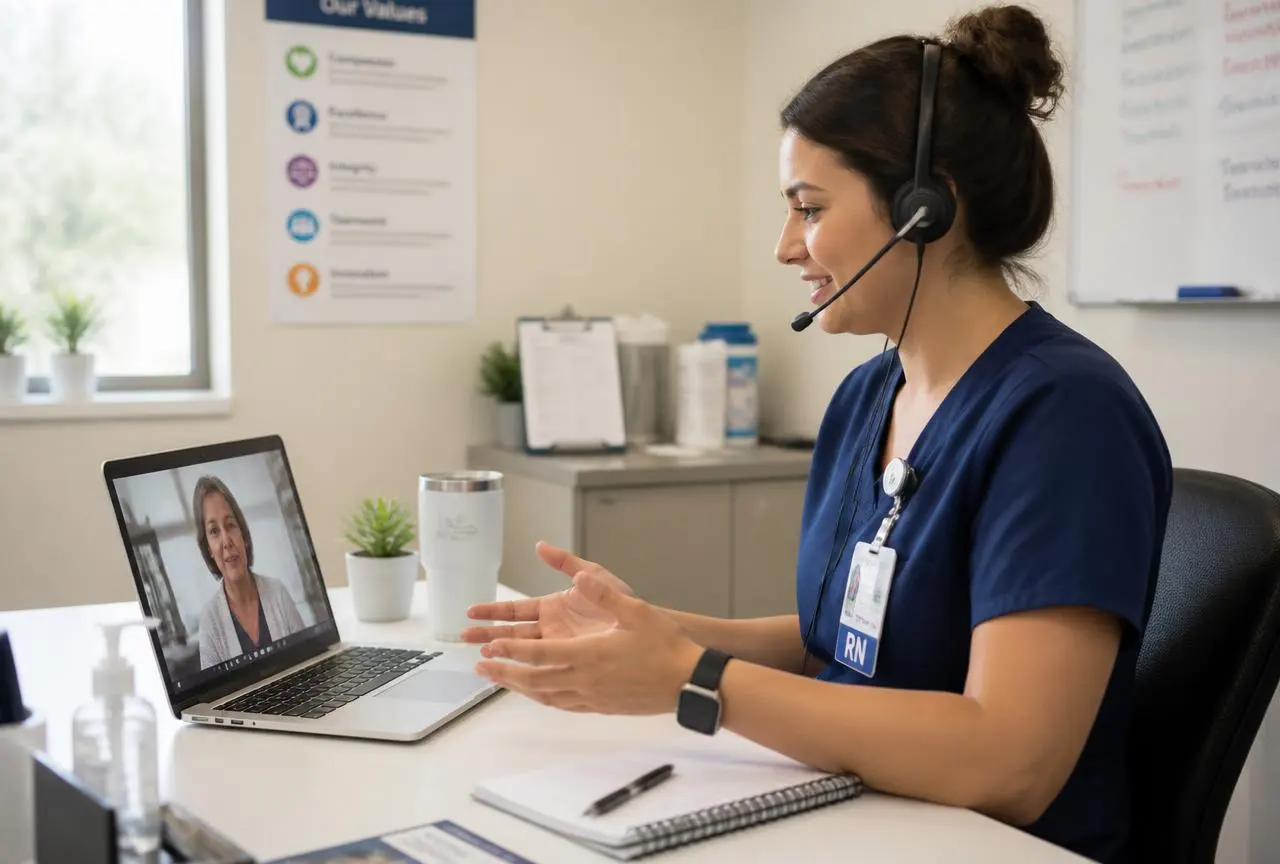
Most assessments happen where you live: your home, SIL or SDA accommodation, a retirement village or an aged care setting. That lets the nurse see your bathroom set-up and routines as they really are.
When a physical examination isn't needed, telehealth can be quicker and just as useful, for example for product reviews and follow-ups.
Who can benefit from a continence assessment?
- NDIS participants whose plan includes, or may need, continence supports
- People with bladder or bowel changes after illness, surgery or injury
- People living with disability, neurological conditions or spinal cord injury
- Older people wanting to stay independent at home
- Families and carers who want clear guidance and the right products
- Support coordinators and plan managers who need a clear written report
Areas we service
Our nurses visit homes across South East Queensland and Northern NSW, including Brisbane, Logan, Redlands, Ipswich, Moreton Bay, Sunshine Coast, Gold Coast, Tweed Heads, Northern Rivers, Byron Shire, Ballina and Lismore. Telehealth is available Australia-wide. Not sure if we cover your suburb? Call 0401 723 087.
Frequently asked questions
Do I need an NDIS plan to have a continence assessment?
No. We assess NDIS participants and privately funded clients. Private assessments are quoted as a fixed fee before we visit, and you don't need a referral.
Will the NDIS fund my assessment or products?
We can't decide or promise NDIS funding, as that is up to the NDIA and depends on your plan. Continence assessments are often funded under Capacity Building (Improved Daily Living), and products under Core Supports (Consumables). Our report may help with care planning and funding paperwork. See our NDIS funding guide for more.
Who carries out the assessment?
A registered nurse with experience in continence care carries out every assessment.
How long does an assessment take?
It depends on your needs. We'll give you an idea of timing when we book, so you can plan your day.
Can it be done by telehealth?
Yes, when a physical examination isn't needed. Product reviews, follow-ups and some plan-review reports work well by video or phone.
What happens after the assessment?
You receive a written report and care plan. With your consent, we can share it with your support coordinator, plan manager, GP or treating team.
More questions? Browse our full FAQs.
Sample report
See what you'll
Ask us for a de-identified sample report. It shows the level of clinical detail, the product recommendations, and how the findings link back to goals, so you know what to expect.
Book a continence assessment
Tell us a little about your situation and our intake team will be in touch within 1–2 business days.